
Process · Notes from the still
Open air, and what it admits
American Single Malt here is fermented in the open so the local flora can reach the wash. That is a choice with consequences, and they write it on the bottle.
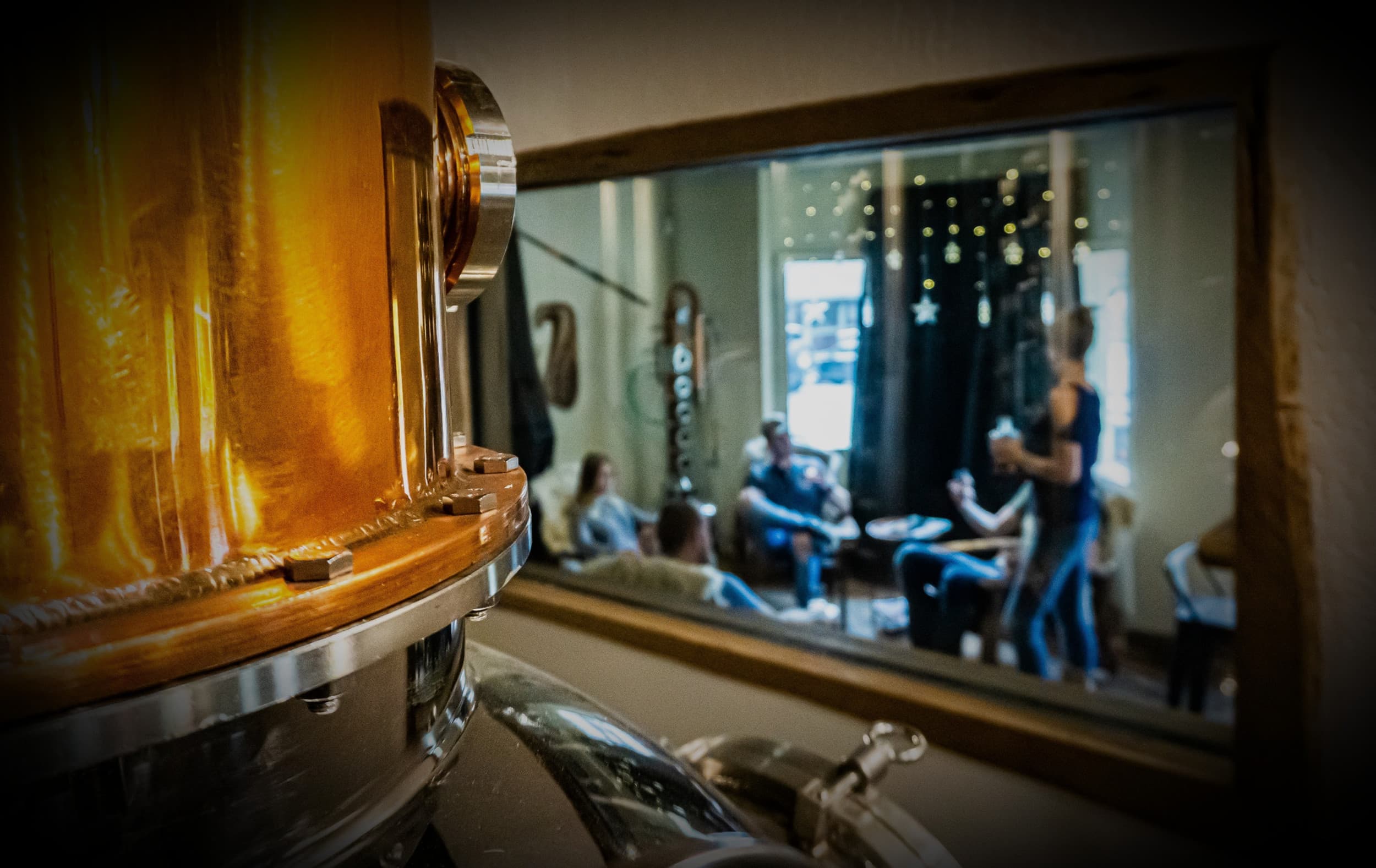
Photograph from hinterhausdistilling.com
Bonnie and Nate Randall have said, in American Whiskey Magazine, that single malt was the plan from the first drawing of the stillhouse. Equipment, grain, and the order in which spirits were introduced to the public all follow from that decision. They wanted a malt that could only be made here.
The method they named is unusually transparent: local family-farm barley, grown and floor-malted nearby; Sierra Nevada water from the source; open-air fermentation so local flora and fauna can impart flavor; aging at this elevation and climate. They call the result terroir, which in whiskey is a word that only earns its keep when the producer will tell you what actually happened in the tun.
Discovery is the ongoing expression of that work — 46% ABV, 100% malted barley, batches that change their maltbill in public. The California shop currently lists Batch 6 with Admiral Pacific Victor, Kilnsmith, and Great Western Pure California, plus a cooperage note. Singularity is the same idea taken further: cask strength, non-chill filtered, no color, proof that varies because the barrel is allowed to finish the sentence.
Open fermentation is not a romantic story about mountain air. It is a microbiological decision. Whatever lives in Arnold in a given season is invited into the wash. The bottle is the record of that invitation.